
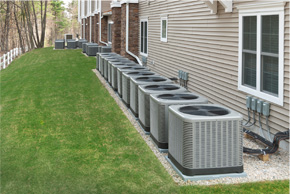
Introducing R-454B: The Refrigerant of the Future
Introducing R-454B: The Refrigerant of the Future
Climate change and environmental regulations are driving a seismic shift in HVAC refrigerants. R‑22 (commonly known as Freon™) was standard for years, but that’s changing fast. Today, we’re proud to introduce R‑454B, an innovative refrigerant ready to power the next generation of energy-efficient and eco-conscious cooling solutions.
What Is R-454B?
R‑454B is a zeotropic blend of about 69% R‑32 and 31% R‑1234yf. Known by trade names like Opteon XL41, Solstice 454B, and Puron Advance, it brings together the best of both worlds: environmental performance and HVAC compatibility. Source: Wikipedia
Why R-454B Is Better
1. Massively Lower Global Warming Potential (GWP)
R‑454 B’s GWP is around 466, compared to 2088 for R‑410A—about a 78% reduction in greenhouse impact.Wikipedia+1
2. Seamless Transition from R-410A
The properties of R‑454B closely match R‑410A, allowing equipment manufacturers to adapt systems with minimal engineering changes—a smoother shift for industry and installers.Kobie Complete Heating & Cooling Inc.+8US Air Conditioning Distributors |+8Wikipedia+8
3. Comparable or Improved Efficiency
R‑454B systems often offer equal or superior energy efficiency compared to R‑410A, helping lower operating costs and improve performance—especially in extreme weather.A&E Heating and Cooling
4. Safe and Future-Ready
R‑454B is classified as A2L—meaning it’s non-toxic and mildly flammable. It’s generally safe when handled properly, and many existing safety protocols for R‑410A still apply.Wikipedia+10US Air Conditioning Distributors |+10colemanac.com+10
5. Long-Term Regulatory Stability
Because of its low GWP and compatibility, R‑454B is expected to remain viable long-term, reducing the likelihood of future refrigerant transitions.Bosch Home Comfort+12tempmaster-hvac.com+12Mattioni Plumbing+12
Why R-22 Is Being Phased Out
1. Ozone-Depleting Potential (ODP)
R‑22 is an HCFC (hydrochlorofluorocarbon) that releases chlorine when exposed to sunlight, damaging the ozone layer.Petro+6briarwoodheatingandcooling.com+6Wikipedia+6
2. Montreal Protocol & U.S. Regulations
Global agreements kicking off in 1987 (Montreal Protocol) began phasing out R‑22. In the U.S., new equipment using R‑22 was banned around 2010, and by January 1, 2020, production and import were entirely prohibited.briarwoodheatingandcooling.com+2Wikipedia+2
3. Rising Costs and Scarcity
Now, only recycled or reclaimed R‑22 can be used. Costs have soared, sometimes exceeding $1,000 for a single service visit, and availability is minimal.Kobie Complete Heating & Cooling Inc.+5A&E Heating and Cooling+5Petro+5
Putting It All Together
| Feature | R-22 (Legacy) | R-410A (Interim) | R-454B (New Standard) |
|---|---|---|---|
| Ozone Depletion | High (HCFC, ozone-depleting) | None (HFC, no ODP) | None (HFO blend) |
| Global Warming Potential (GWP) | ~1810 (R-22) | ~2088 | ~466 (≈78% lower than R-410A) |
| Flammability/Toxicity | Non-flammable, moderate toxicity | Non-flammable (A1) | Mildly flammable, non-toxic (A2L) |
| Efficiency | Lower than current standards | Higher SEER, better efficiency | Equal or better than R-410A |
| Regulatory Status | Phased out, banned for new systems | Being phased down under the AIM Act | HVAC-friendly, compliant with AIM and Kigali |
Call to Action for HeatGuy, LLC
Educate your clients: Update your website, newsletters, and service materials to explain why R-454B is the responsible choice over legacy refrigerants like R-22 and R-410A.
Train your techs: Ensure your staff is fully versed in R-454B — its handling, tools needed, safety protocols, and installation nuances.
Prepare for the market transition: Market R-454B–compatible systems as the new standard for efficiency, environmental responsibility, and code compliance.
Conclusion
At HeatGuy, LLC, we believe in leading the way toward efficient, eco-conscious, and future-ready HVAC solutions. R-454B delivers lower environmental impact, better efficiency, smoother industry integration, and long-term regulatory assurance.
Embrace the future—it’s cooling smarter, cleaner, and greener.